


Bourbon
America’s own whiskey
Corn, new charred oak and hot Kentucky summers: that is bourbon’s recipe for vanilla, caramel and spice. Here is how it’s made, what the label promises and which style to look for, from high-rye to wheated.
A short history
Kentucky’s corn whiskey
Scots-Irish and German settlers carried distilling over the mountains into Kentucky in the late 1700s. Corn grew easily there, and whiskey was the best way to sell a surplus: it kept, and it travelled by flatboat down the Ohio and Mississippi to New Orleans. Where the name comes from is still argued. ‘Old Bourbon’ was the huge county Virginia created there in 1785, named after the French royal family; another theory points to Bourbon Street in New Orleans, where much of the whiskey was sold.
- 1785Virginia creates Bourbon County in its Kentucky lands. Kentucky becomes the 15th state in 1792.
- 1838–56Scottish-born doctor James Crow brings science to the Old Oscar Pepper distillery, now Woodford Reserve: thermometers, acidity tests and the sour mash method.
- 1897The Bottled-in-Bond Act: one distillery, one season, at least four years in a government-bonded warehouse, 100 proof. A guarantee against fake and doctored whiskey.
- 1920–33Prohibition. Six companies may sell ‘medicinal’ whiskey from old stock; most distilleries close, many for good.
- 1964Congress declares bourbon ‘a distinctive product of the United States’. The name is reserved for whiskey made in the USA.
- 1984Blanton’s, from today’s Buffalo Trace Distillery, is the first single-barrel bourbon on the market. The revival begins: Kentucky now has more than three barrels ageing for every resident.
How it’s made
Seven steps from corn to bottle
Bourbon follows the same path as any whisky (grain, fermentation, distillation, wood) but does almost every step its own way. Here is how a Kentucky distillery works.
01
The mash bill
Every bourbon starts with a recipe of grains, the mash bill. By law at least 51% must be corn, and most distillers use between about 60 and 80%: corn gives sweetness and body. The rest is a ‘flavouring grain’, rye for spice or wheat for softness, plus a little malted barley, whose enzymes will turn the starch into sugar.
Distilleries guard their recipes and often run several. Buffalo Trace’s best-known mash bill, behind Buffalo Trace, Eagle Rare and E.H. Taylor, has less than 10% rye.
51%corn, at the very least
02
Milling & cooking
The grain is ground to a coarse meal and cooked in water: the corn first, close to boiling point, then the rye or wheat as it cools, and the malted barley last, once the mash is cool enough for its enzymes to work.
Unlike Scotch, the mash is not drained. Grain, husks and all go on to the fermenter and the still, which is part of what makes bourbon fuller and oilier.
3grains, added as the mash cools
03
Sour mash & fermentation
Before the yeast goes in, most distillers add ‘backset’: the sour, spent liquid left from the last distillation, often 10 to 30% of the volume. It makes the mash more acidic, so the yeast thrives and stray bacteria don’t, and it keeps each batch like the last. That is what ‘sour mash’ on a label means; nearly all bourbon is made this way.
Many distilleries keep their own yeast strains, sometimes for generations. After a few days the fermenters hold a thick ‘distiller’s beer’ of about 8 to 10% alcohol.
10–30%backset in a sour mash
04
Distillation
The whole mash goes into a tall column, the beer still. Steam rising through its perforated plates strips out the alcohol, which comes off at roughly 50 to 60% as ‘low wines’. The spent grain left at the bottom becomes backset and cattle feed.
A second still then cleans and strengthens the spirit into ‘high wine’ or ‘white dog’, usually around 65 to 70%. A doubler is a pot still filled with the condensed low wines; a thumper takes the hot vapour straight from the column and bubbles it through liquid, with the thump that gives it its name. The law stops at 80% (160 proof), so plenty of grain flavour stays in.
160proof at most off the still (80%)
05
New charred oak
The white dog is brought down with water to no more than 62.5% (125 proof) and filled into new oak barrels, charred inside. Most are American white oak and hold 53 US gallons, about 200 litres. Distillers usually choose char level 3 or 4, the ‘alligator’ char: the charcoal filters the spirit, and the toasted wood behind it gives vanilla, caramel and every bit of the colour, since none may be added.
A barrel holds bourbon only once. Afterwards most go abroad to age Scotch and Irish whiskey, rum and tequila.
53US gallons, about 200 litres
06
The rickhouse
Barrels age in rickhouses: tall warehouses where they lie on open wooden racks, the ricks, often seven to nine floors high. Kentucky’s hot summers and cold winters push the spirit deep into the charred wood and draw it out again. Under the roof the air can pass 50 °C in summer; water evaporates faster than alcohol, so the strength rises and the bourbon matures fast. Near the ground it ages slowly and gently.
The angels take about 3 to 5% a year, against roughly 2% in Scotland, so bourbon gets there sooner: most premium bourbons are bottled at 6 to 10 years. There is no minimum age, but straight bourbon needs at least two years.
3–5%a year to the angels
07
Bottling
The barrels are emptied, usually mingled in batches and brought down with water, never below 40% (80 proof). Nothing else may go in: no colour, no flavour. Many bourbons are chill-filtered so they stay clear over ice.
The label tells you the rest: small batch (a selection of barrels, a term with no legal definition), single barrel (one barrel, often numbered), barrel proof (no water added) or bottled in bond (exactly 100 proof, at least four years old).
80proof minimum (40%)
Styles
It’s in the mash bill
All bourbon is mostly corn. What goes in with it, and what happens next, is what you taste.
Classic bourbon
Around 70–80% corn with a little rye and malted barley: sweet and round, vanilla, caramel, a touch of spice. On our shelves: Buffalo Trace, Eagle Rare 10, E.H. Taylor Small Batch.
High-rye bourbon
A bigger share of rye, from about 15% to over 30%: pepper, clove and mint alongside the sweetness. On our shelves: 1792 Small Batch.
Wheated bourbon
Wheat instead of rye as the flavouring grain: softer and rounder, with bread and honey. Maker’s Mark and Weller are the famous ones. On our shelves: Rebel.
Four grain
Corn, rye, wheat and malted barley in one mash: spice and softness together. On our shelves: Penelope.
Finished bourbon
A few extra months in a second cask, such as a toasted barrel or one that held wine, sherry or rum. The label says what it was finished in. On our shelves: Penelope Toasted, Yellowstone Toasted Finish.
Rye whiskey
America’s other classic: at least 51% rye, with the same barrel rules. Drier and spicier, the whiskey of the original Manhattan. On our shelves: Sazerac Rye, Old Ezra 7 Rye.
Tennessee whiskey
Made much like bourbon, in Tennessee, then filtered through sugar-maple charcoal before it goes into the barrel: the Lincoln County Process. Jack Daniel’s and George Dickel are the best known.
Corn whiskey
Close to the frontier original: at least 80% corn, sold unaged or aged in used or uncharred barrels.
The rules
What the label promises
In the US, whiskey is defined by federal law (27 CFR part 5). The headline rules, simplified:
Bourbon
27 CFR 5.143
- Made in the USA from at least 51% corn
- Distilled to no more than 80% (160 proof)
- Aged in new charred oak, filled at no more than 62.5% (125 proof)
- Bottled at 40% (80 proof) or more
- Only water may be added: no colouring, no flavouring
Straight bourbon
27 CFR 5.143
- Follows every bourbon rule
- At least 2 years in new charred oak
- Under 4 years old: the age must be on the label
- Blends of straight bourbons only from the same state
Bottled in bond
Bottled-in-Bond Act 1897 · 27 CFR 5.88
- One distiller at one distillery
- Distilled in one season: January–June or July–December
- At least 4 years in a government-bonded warehouse
- Bottled at exactly 50% (100 proof)
- The label names the distillery
Tennessee whiskey
Tennessee law, 2013
- Made and aged in Tennessee
- At least 51% corn, new charred oak, the same strength limits as bourbon
- Filtered through maple charcoal before ageing (the Lincoln County Process)
- One exemption: Prichard’s, which never used it
A simplified summary; the full texts go into more detail. Rye whiskey has the same grain, strength and barrel rules, with at least 51% rye.
Words to know
A short bourbon glossary
- Proof
- The American way to give strength: twice the alcohol by volume, so 100 proof is 50%.
- Mash bill
- The grain recipe, for example 75% corn, 13% rye and 12% malted barley.
- Flavouring grain
- The second grain after corn: rye for spice, wheat for softness.
- Sour mash
- A mash started with backset from the previous run, for steady acidity and consistent batches.
- White dog
- New spirit straight off the still, before any barrel. Also called new make.
- Small batch
- A selection of barrels mingled together. Popular on labels, but with no legal definition.
- Single barrel
- Bottled from one barrel only, so every barrel is a little different.
- Barrel proof
- Bottled at the strength it came out of the barrel, no water added: cask strength, American style.
- Bonded
- Short for bottled in bond: one distillery, one season, four years, 100 proof.
- Wheater
- Bourbon made with wheat instead of rye as the flavouring grain.
How to taste
Five steps to taste bourbon
- Choose the glassA tulip-shaped glass for tasting, a heavy tumbler for an Old Fashioned or bourbon on the rocks.
- LookAll the colour comes from the charred barrel. Deeper amber usually means more years, or a hot spot high in the rickhouse.
- NoseGently, as bourbon is often bottled strong. Look for vanilla, caramel and corn, then spice from rye or bread and honey from wheat.
- Add water or iceA few drops calm a barrel-proof bourbon and open it up. A large ice cube works too, the Kentucky way.
- Taste & finishLet it coat your mouth. Sweetness first, then oak and spice; a long, warm finish usually means age and strength.
Taste bourbon side by side with Scotch and world whiskies at our whisky masterclasses in the shop.
See our masterclasses →In our shop
Bourbon on our shelves
From Buffalo Trace’s Frankfort classics to Bardstown’s 1792 and Rebel, Penelope’s four-grain blends and the yearly Blood Oath pacts. Collect them at the shop or get free local delivery.
-
★★★★★Very recommended

Buffalo Trace Kentucky Bourbon 40% 0.7l
€17.95 Add to cart -

Eagle Rare 10yo 45% 0.7l
€29.95 Add to cart -

E.H. Taylor Small Batch 50% 0.75l
€64.95 Add to cart -
★★★★★Very recommended

1792 Straight Kentucky Bourbon Small Batch 46.85% 75cl
€39.95 Add to cart -
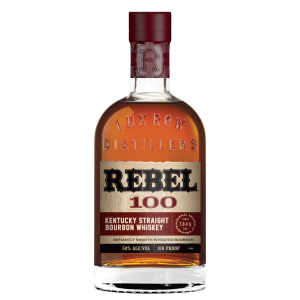
Rebel 100 50% 0.70l
€20.95 Add to cart -
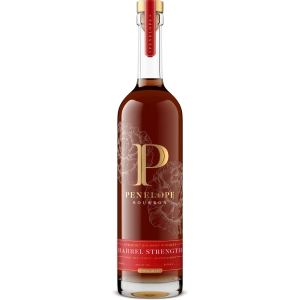
Penelope Barrel Strength Bourbon 56% 0.7l
€69.95 Add to cart -

Sazerac Rye 45% 0.7l
€32.95 Add to cart -
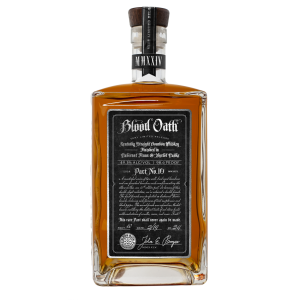
Blood Oath X Bourbon 49.3% 0.75l
€195.95 Add to cart -
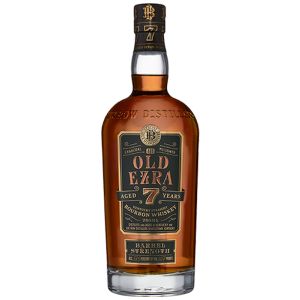
Old Ezra Brooks 7 Year Bourbon 56.50% 0.75l
€39.95 Add to cart -
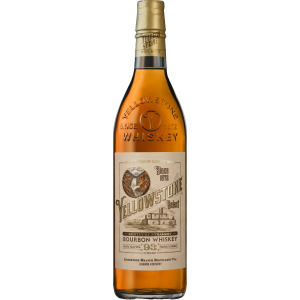
Yellowstone Select Whiskey Bourbon 46.50% 0.7l
€42.95 Add to cart -
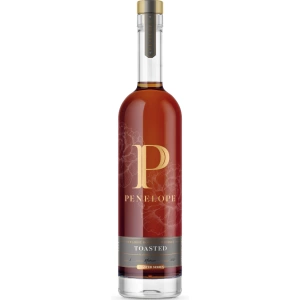
Penelope Toasted Bourbon 50% 0.7l
€66.95 Add to cart -
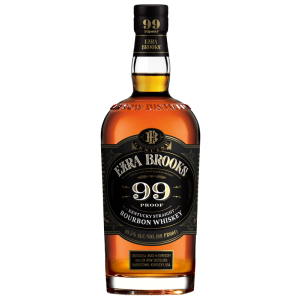
Ezra Brooks 99 Bourbon 45.50% 0.7l
€18.95 Add to cart