


Discover›Spirits guide
Scotch whisky
From the Lowlands to the Islands
Scotch is whisky made and matured in Scotland, for at least three years in oak. Its five protected regions and its islands give it many characters, from soft Lowland malts to the peat smoke of Islay. Here are the regions on a map, a short history, the categories on the label and how to enjoy a dram.
A short history
Five centuries of Scotch
Scotland has been distilling for more than five hundred years. Monks, smugglers, tax collectors and blenders all shaped Scotch, and since 2009 one law sets out how it is made and what its label may say.
- 1494The royal accounts of King James IV record eight bolls of malt given to Friar John Cor to make aqua vitae: the first written record of distilling in Scotland. In Gaelic the water of life is uisge beatha, which became ‘whisky’.
- 1644The Scottish Parliament puts the first tax on spirits. For some 150 years much of the whisky is made in hidden stills and smuggled past the excisemen. By the 1820s about 14,000 illicit stills are seized every year, and more than half the whisky drunk in Scotland pays no duty.
- 1823The Excise Act makes legal distilling worthwhile: a £10 licence and a set duty per gallon. Licensed distilleries jump from 111 to 263 in two years, and many of today’s distilleries stand where smugglers once worked.
- 1860A new law lets merchants blend malt and grain whisky under bond, and Andrew Usher of Edinburgh leads the way. When phylloxera ruins the vineyards of France in the 1870s and 1880s, blended Scotch takes the place of brandy in glasses around the world.
- 1915A wartime law stops spirits from being sold too young: whisky must rest in a bonded warehouse for at least two years, three from 1916. The three-year minimum still defines Scotch today.
- 2009The Scotch Whisky Regulations set out five categories and protect five regional names; since 2012 single malt must also be bottled in Scotland. In 2025 some 43 bottles of Scotch left Scotland every second.
The regions
Five regions and the Islands
Scotch law protects five names: the regions Highland, Lowland and Speyside, and the localities Islay and Campbeltown. Whisky lovers add a sixth, the Islands. A region is a hint, not a rule: every distillery has its own style, but the landscape, the water and old local habits still show in the glass.
01
Where Scotch is made
Scotch may be made anywhere in Scotland, but five names are protected by law. Highland and Lowland are divided by the Highland line, which runs roughly from Greenock on the Clyde to Dundee on the Tay. Speyside, a river valley in the north-east, has its own name inside the Highlands; Islay and Campbeltown are the two small ‘localities’.
A region on the label tells you where the whisky was distilled, and it may only be used if all of it was distilled there. It is a clue to the style, not a recipe: casks, peat and each distillery’s own way of working often matter more.
154distilleries working in Scotland in May 2026
02
Speyside
Along the River Spey and its side valleys, in the north-east, lies the densest cluster of distilleries anywhere: about half of all Scotland’s malt distilleries, among them some of the world’s best-selling single malts. Soft, clean water, barley from the coastal plain and, long ago, glens far from the excisemen made it whisky country.
Speyside malts are often elegant and fruity, with apple, pear, honey and vanilla, or rich and round when matured in sherry casks; most use little or no peat. The Glenlivet was one of the first distilleries in the area to take out a licence under the 1823 law.
≈ 50distilleries, about half of Scotland’s malt distilleries
03
Highlands
The largest region covers everything north of the Highland line, from Loch Lomond near Glasgow to the far north coast, and by law every island except Islay. With so much ground there is no single Highland style: rich and heathery in the north, fuller and drier in the east, light and fruity in the south, sometimes salty and lightly smoky by the sea.
At its southern edge stands the Loch Lomond distillery, one of the few in Scotland to make both malt and grain whisky. Beside classic swan-neck pot stills it runs its own straight-necked stills, so a single distillery can make many different styles of spirit.
1784the year a Highland line was first drawn, to tax whisky
04
Islay
Islay, in the south of the Hebrides, is the home of smoky whisky. Its peat bogs, sea winds and long habit of drying malt over peat fires give the famous notes of bonfire, iodine and seaweed, strongest in the distilleries of the south coast. Others, in the north, also make gentle malts with little or no peat.
The island is in the middle of a revival. Port Ellen, closed in 1983, was rebuilt and reopened in 2024, Laggan Bay began distilling in April 2026, and another distillery is on the way. Most stand right by the sea, their whitewashed warehouses facing the waves.
11distilleries working on the island in 2026
05
Lowlands
South of the Highland line lie rolling hills and rich farmland. Lowland malts are traditionally light, soft and grassy, with floral and citrus notes, and some were distilled three times for extra lightness. The big grain distilleries that supply the blends grew up here too, close to Glasgow, Edinburgh and the ports.
Many Lowland distilleries closed in the 20th century. Littlemill, near Glasgow, traced its roots to 1772 and fell silent in 1994; its last casks are now rare treasures. Bladnoch, founded in 1817 near Wigtown, is Scotland’s southernmost distillery, and new distilleries keep opening in the region.
1772Littlemill’s founding date, perhaps the oldest licensed distillery in Scotland
06
Campbeltown
This small fishing town near the tip of the Kintyre peninsula was once called the whisky capital of the world. In Victorian times it had more than thirty distilleries, shipping their whisky from its sheltered harbour. Overproduction, American Prohibition and the slump of the 1920s and 1930s closed almost all of them.
Three remain: Springbank, Glengyle and Glen Scotia, founded in 1832 and today part of the Loch Lomond Group. Their malts share a style of their own, a little oily and salty, with dried fruit and a touch of smoke.
3distilleries today, from more than 30 in Victorian times
07
The Islands
Whisky is made on islands from Arran in the south to Orkney and Shetland in the north, with Skye, Mull, Jura, Raasay, Lewis and Harris in between. The Islands are not a protected region: by law their whiskies are Highland. But the name is widely used, and the sea is never far from the glass.
Island whiskies vary as much as the islands: honeyed with gentle heather smoke on Orkney, peppery and maritime on Skye, light and sweet on Arran. Many island distilleries are young, built in the last twenty years.
790+islands around Scotland’s coast
Styles
Five categories, many styles
The law sorts Scotch into five categories, and one of them must appear on every label. Then come the styles: peat, casks, age and the character of each distillery.
Single malt
Water and malted barley only, distilled in pot stills at a single distillery, and bottled in Scotland. The best-known Scotch, though only about 29% of exports by value. On our shelves: Loch Lomond, Glen Scotia, Bladnoch, Glengarry, Lagavulin and more.
Single grain
One distillery, with other cereals such as wheat or maize allowed alongside malted barley, usually from column stills. Light and sweet, mostly made for blends; a few are bottled on their own, often at a great age. On our shelves: Loch Lomond Single Grain, peated or unpeated, and Strathcolm.
Blended malt
Single malts from two or more distilleries married together, with no grain whisky. Once sold as ‘vatted’ or ‘pure’ malt, names the law no longer allows. On our shelves: three Noble Rebel blended malts.
Blended grain
Single grains from two or more distilleries. Smooth and light, and rarely seen on the shelf.
Blended Scotch
Malt and grain whiskies from several distilleries: the blender’s art. Most Scotch is blended; bottled blends make up about 60% of exports by value. On our shelves: Loch Lomond Clansman and the Lismore Special Reserve blends, up to 18 years old.
Peated & smoky
Malt dried over peat fires, from a wisp of smoke to a full bonfire. Islay is famous for it, but peated whisky is made all over Scotland, in the Highlands and Campbeltown too. On our shelves: Lagavulin 16, Loch Lomond Inchmoan and the Peated Single Grain, and Noble Rebel Smoke Symphony.
Sherry & wine casks
Most Scotch matures in American oak that once held bourbon. Sherry casks of European oak add dried fruit, spice and colour, and many whiskies finish in a second cask of port, wine, rum or cognac. On our shelves: Macallan 12 Double Cask, Bladnoch Vinaya (sherry) and Samsara (Californian red wine), Loch Lomond Falls of Falloch (cognac) and Glen Scotia Double Cask (rum).
Silent distilleries
Whisky from distilleries that fell silent, such as Littlemill, or from casks filled before a distillery closed, as with Port Ellen and Brora, both since reborn. Every bottle comes from a dwindling stock, which makes them prized by collectors. On request: Littlemill up to 47 years old, Port Ellen and Brora.
The rules
What the label promises
Scotch is protected by UK law, the Scotch Whisky Regulations 2009, and as a geographical indication abroad. The headline rules, simplified:
Scotch whisky
Scotch Whisky Regulations 2009
- Made in Scotland from water and malted barley; other whole grains may be added
- Mashed and fermented at the distillery, with yeast only
- Distilled to less than 94.8% alcohol
- Matured in Scotland in oak casks of 700 litres or less, for at least 3 years
- Bottled at 40% or more; only water and plain caramel may be added
The five categories
One of them on every label
- Single malt: malted barley only, pot stills, one distillery
- Single grain: one distillery, other cereals allowed
- Blended malt: single malts from more than one distillery
- Blended grain: single grains from more than one distillery
- Blended Scotch: malt and grain whiskies blended together
Regions on the label
Protected names
- Highland, Lowland and Speyside: the protected regions
- Islay and Campbeltown: the protected localities
- Used only if all the whisky was distilled there
- ‘Islands’ is not protected: island whiskies are legally Highland
- Single malt must be bottled in Scotland (since 2012)
Reading the label
Names and numbers
- An age is the age of the youngest whisky in the bottle
- A year of distillation must come with the bottling year or the age
- A distillery’s name only on whisky distilled entirely there
- ‘Pure malt’ and ‘vatted malt’ are no longer allowed
- Cask strength, single cask, non-chill-filtered: the producer’s own words
A simplified summary of the Scotch Whisky Regulations 2009, which go into more detail. Scotch Whisky is also protected as a geographical indication in the EU and in many other countries.
Words to know
A short Scotch glossary
- Uisge beatha
- Gaelic for ‘water of life’, the origin of the word whisky.
- Dram
- A measure of whisky, never an exact one: as much as your host pours.
- Slàinte mhath
- ‘Good health’ in Gaelic, the Scottish toast. Say it ‘slanj-a-va’.
- Quaich
- A shallow, two-handled cup, shared to welcome a guest or seal a friendship.
- Highland line
- The line from Greenock to Dundee that divides Highland from Lowland whisky.
- Official bottling
- A whisky bottled by the owners of the distillery that made it.
- Independent bottler
- A merchant who buys casks from distilleries and bottles them under its own label.
- Silent distillery
- A distillery that has closed; its whisky lives on only in the casks left behind.
- Vintage
- The year of distillation on the label; all the whisky must come from that year.
- Burns Night
- 25 January, the birthday of the poet Robert Burns, celebrated with haggis, poems and a dram.
How to taste
Five ways to enjoy Scotch
- The glassA tulip-shaped nosing glass, such as the Glencairn, gathers the aromas. Keep the tumbler for ice and highballs.
- Taste the mapTry the regions side by side, from light to smoky: a Lowland, a Speyside, a Highland, then Campbeltown, with Islay last, as peat smoke lingers.
- Water & iceA few drops of water open up a cask-strength or smoky malt. Ice dulls the aromas but makes a blend refreshing on a warm day.
- At the tableSmoked salmon and oysters love a coastal malt; dark chocolate and blue cheese suit a sherried one. On Burns Night, Scots raise a dram to the haggis.
- In cocktailsBlended Scotch is the base of the Rob Roy, the Blood and Sand and the Penicillin, with honey, ginger and a float of Islay malt. Or keep it simple: a highball with soda.
Taste the regions side by side with us: our whisky masterclasses take you through a flight of Scotch, from the Lowlands to Islay.
See our masterclasses →In our shop
Scotch on our shelves
Single malts from every region and the blends that made Scotch famous: Loch Lomond, Glen Scotia and Littlemill from the Loch Lomond Group, Bladnoch from the Lowlands, Lismore, Noble Rebel and some of Scotland’s best-known names. Collect them at the shop or get free local delivery.
-

Loch Lomond 12 YO Single Malt Inchmurrin 0.7l 46%
€32.50 Add to cart -

Macallan 12 Double Cask
€69.95 Add to cart -

Lagavulin 16 0.7L 43%
€77.90 Add to cart -

Bladnoch Single Malt 11 YO 46,7% 0.7L
€64.95 Add to cart -

Glen Scotia 15 YO Single Malt 0.7l 46%
€46.95 Add to cart -

Loch Lomond Unpeated Single Grain Whisky 0.7l 46%
€19.75 Add to cart -
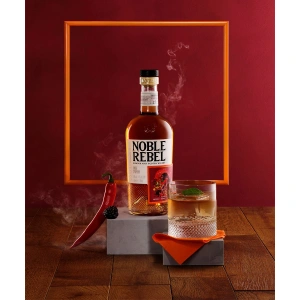
Noble Rebel Smoke Symphony Blended Malt Scotch Whisky 46% 0.7L
€29.95 Add to cart -

Lismore 18yo Special Reserve Whisky 0.7l 40%
€36.95 Add to cart