


Discover›Spirits guide
Gin
Juniper, botanicals and a clean spirit
Gin is a neutral spirit flavoured with juniper and other botanicals: seeds, roots, peels, flowers and spices. It began as Dutch genever, grew up in London and is now made almost everywhere. Here is how it is made, what ‘London Dry’ really means, and how to taste it.
A short history
From Dutch genever to London Dry
Juniper was a medicine long before it was a drink. Dutch and Flemish distillers turned it into genever; the English shortened the name to gin, lived through a ‘gin craze’ and, once column stills gave them a clean spirit, created the dry gin we drink today.
- 1552In Antwerp, Philippus Hermanni’s distilling book prints one of the first known recipes for a spirit flavoured with juniper berries.
- 1690Under the Dutch-born King William III, England encourages distilling from home-grown grain. Cheap gin floods London.
- 1751After decades of the ‘gin craze’, a new Gin Act and Hogarth’s print Gin Lane help bring London’s drinking back under control.
- 1831Aeneas Coffey patents his two-column still. Its clean spirit no longer needs sugar to hide its faults, and sweet gin slowly gives way to dry.
- 1870Schweppes sells its Indian Tonic Water, made bitter with quinine. Gin and tonic, already drunk in British India, goes round the world.
- 2009Sipsmith opens the first new copper-pot distillery in London since 1820 and helps start a worldwide wave of craft gins.
How it’s made
From neutral spirit to gin: seven steps
Gin starts as a pure, neutral spirit. Its character comes from juniper, the other botanicals and the way their flavour reaches the spirit: steeped and distilled, carried by vapour, or simply added.
01
A neutral spirit
Almost every gin begins as a neutral spirit: alcohol distilled from grain, molasses, grapes or potatoes in a column still until it is almost pure and has very little taste of its own. For distilled gin, EU law asks for at least 96% before the botanicals go in.
Most gin distillers buy this spirit and concentrate on the flavouring. The base still counts: grain, molasses or grape spirit each leave a slightly different texture. Genever, gin’s Dutch ancestor, adds a malty grain spirit of its own (see below).
96%minimum strength of the spirit for distilled gin
02
Juniper & botanicals
Gin must taste mainly of juniper: that is the one rule every gin shares. The berries are really the fleshy cones of Juniperus communis, picked mostly from wild bushes in Italy and the Balkans. They take around two years to ripen, so each bush carries green and ripe berries at the same time.
Around juniper, most gins build on the same few: coriander seed for spicy citrus, angelica root for dry, earthy depth, orris, the root of the iris, to bind the aromas, and lemon or orange peel. Cassia, liquorice, almond, cardamom and countless local plants add each gin’s signature.
≈ 2 yearsfor a juniper berry to ripen
03
Steep & distil
The classic method: the neutral spirit is diluted with water, the botanicals go into the pot still to steep, often overnight, and then everything is distilled. The distiller sets aside the first and last part of the run and keeps the heart, rich in juniper and citrus oils.
Some distil exactly one batch’s worth (‘one-shot’); others load more botanicals to make a concentrate and dilute it later with more neutral spirit (‘multi-shot’). For London gin, the spirit coming off the still must be at least 70% alcohol.
70%minimum for London gin straight off the still
04
Through the vapour
In vapour infusion the botanicals never touch the liquid. They sit in a perforated copper basket, and the hot alcohol vapour passes through them on its way to the condenser, picking up their aromas.
The result is usually lighter and fresher, which suits delicate flowers and citrus. Bombay Sapphire still works this way in Carterhead stills from the 1830s. Many distillers combine both methods, steeping most botanicals and putting the most delicate ones in the basket.
1830sCarterhead stills still at work today
05
London, distilled or compound
The label tells you how the flavour got in. London gin, or London Dry, can be made anywhere, but every flavour must come from distilling the spirit with natural botanicals. Afterwards only water, neutral spirit of the same purity and a trace of sweetening may be added, and no colour.
Distilled gin is also redistilled with juniper, but flavourings may be added after distillation. Plain ‘gin’ needs no distillation at all: neutral spirit blended with juniper and other flavourings, the ‘compound’ gin once made in bathtubs during Prohibition.
37.5%minimum strength for any gin in the EU
06
Genever: malt wine first
Gin’s Dutch and Belgian ancestor starts differently. Malt wine, moutwijn, is distilled in pot stills from a fermented mash of malted barley, rye and maize to about 50%, and keeps a rich, bready flavour close to an unaged whisky.
Blended with neutral spirit and juniper, it makes genever. Oude (‘old’) genever is the traditional style, with at least 15% malt wine; jonge (‘young’) genever has less and is lighter and more neutral. The words describe the recipe, not the age.
≥ 15%malt wine in oude genever
07
Water & bottling
The distillate is brought down to bottling strength with pure water: at least 37.5% by law, most often 40 to 47%. Navy strength gins are bottled at about 57%, the strength at which, as the story goes, gin-soaked gunpowder would still light.
Gin rich in botanical oils can turn cloudy when chilled or mixed, so many gins are chill-filtered; some are left unfiltered on purpose for a fuller texture. A few are rested in oak casks, which gives them a pale golden colour.
57%navy strength
Styles
From London Dry to genever
Some gin styles are defined by law, others by tradition. These are the ones you are most likely to meet.
London Dry
The classic: juniper first, then citrus and spice, bone dry, with every flavour coming from distillation. Despite the name, it can be made anywhere. On our shelves: Ben Lomond Scottish Gin, Crafter’s London Dry.
Contemporary gin
Juniper still leads, but other botanicals step forward: flowers, herbs, berries or local plants. Many craft gins are made this way. On our shelves: Mackmyra’s organic gin with lingonberry and elderflower, Crafter’s Aromatic Flower, Znaps and IMAGIN from Sweden.
Plymouth gin
Rounder and more aromatic than London Dry, made at the Black Friars distillery in Plymouth since 1793. It was a protected geographical indication until 2015, when its owner chose not to keep the status.
Old Tom
The sweetened gin of 18th- and 19th-century London, from before column stills made dry gin possible. Bartenders have revived it for classic cocktails such as the Tom Collins.
Navy strength
Bottled at around 57%, in memory of the Royal Navy’s gunpowder test. Big and intense, a classic in the Gimlet, gin with lime cordial.
Genever
The Dutch and Belgian original, with malt wine giving a bready, whisky-like body. Traditionally served ice-cold in a tulip glass filled to the brim: oude for sipping, jonge for mixing.
Gin de Mahón
Menorca’s own gin, dating back to the island’s British years in the 18th century and protected by a geographical indication: distilled once with juniper in copper stills heated over a wood fire. On the island it is mixed with lemonade as a pomada.
Sloe & flavoured gin
Sloe gin is a liqueur: sloes steeped in gin and sweetened, at 25% or more. Flavoured gins add fruit or flowers, and colour-changing gins turn from blue to pink when tonic’s acidity meets their botanicals, often butterfly pea flower. On our shelves: Ben Lomond’s fruit gins, Crafter’s Aromatic Flower.
The rules
What the label means
In Europe, three names on the label tell you how a gin was made, and genever has rules of its own. The headline rules, simplified:
Gin
Regulation (EU) 2019/787
- Neutral spirit of agricultural origin, flavoured with juniper
- Juniper must be the main taste
- Flavourings may simply be added: no distillation needed
- Bottled at 37.5% or more
- ‘Dry’ only with at most 0.1 g of added sweetening per litre
Distilled gin
Regulation (EU) 2019/787
- Redistilled from neutral spirit of at least 96% with juniper and other natural botanicals
- Juniper must stay the main taste
- Flavourings may be added after distillation
- Essences simply added to spirit do not make distilled gin
- Bottled at 37.5% or more
London gin
Regulation (EU) 2019/787 · defined since 2008
- A distilled gin that can be made anywhere
- All flavour from distilling with natural botanicals; distillate of at least 70%
- At most 5 g of methanol per hectolitre of pure alcohol
- No colouring; at most 0.1 g of sweetening per litre
- May be called London Dry
Genever
Geographical indications
- Made in the Netherlands, Belgium and neighbouring parts of France and Germany
- Neutral spirit and grain distillates, flavoured with juniper
- Oude: at least 15% malt wine, at most 20 g of sugar per litre
- Jonge: at most 15% malt wine and 10 g of sugar per litre
- Korenwijn: at least 51% malt wine
A simplified summary; each set of rules goes into more detail. Gin de Mahón (Menorca) and Vilnius gin (Lithuania) are protected geographical indications too, and sloe gin is a liqueur of at least 25%.
Words to know
A short gin glossary
- Juniper
- The berry-like cone of Juniperus communis: piney, resinous and lightly citrus. Gin takes its name from it, through Dutch jenever and French genièvre.
- Botanicals
- Every plant ingredient used to flavour gin: berries, seeds, roots, barks, peels, flowers and herbs.
- Neutral spirit
- Spirit distilled so high that it has almost no taste of its own; ‘ethyl alcohol of agricultural origin’ in EU law.
- Maceration
- Steeping the botanicals in the spirit before distilling, from a few hours to a day or more.
- Vapour infusion
- Flavouring the alcohol vapour as it passes through a basket of botanicals. The Carterhead still was built for it.
- One-shot · multi-shot
- Distilling exactly one batch’s worth, or a stronger concentrate that is later diluted with more neutral spirit.
- Compound gin
- Gin made without redistillation, by adding flavourings to neutral spirit. It is labelled simply ‘gin’.
- Dry
- On a gin label: at most 0.1 g of added sweetening per litre. It says nothing about how much juniper you taste.
- Malt wine
- Moutwijn: the pot-distilled grain spirit that gives genever its body.
- Navy strength
- Gin bottled at about 57%, after the Royal Navy’s old gunpowder test.
How to taste
Five steps to taste gin
- Start neatA little gin at room temperature in a tulip glass shows the botanicals more clearly than any mix.
- LookMost gin is clear as water. A golden tint means oak, pink usually means fruit, and a blue gin may turn pink with tonic.
- NoseLook for juniper first, pine and resin, then citrus, spice, roots and flowers. A splash of water opens it up.
- Tonic & icePlenty of ice, one part gin to two or three of tonic, and a garnish that echoes the gin: citrus peel, herbs or berries.
- The classicsTry it in a Martini, a Negroni or a Gimlet: each shows a different side of the same gin.
Not sure which gin suits your tonic? Come and taste with us at the shop: we’re happy to help you choose.
Plan your visit →In our shop
Gin on our shelves
Scottish gins from Ben Lomond, classic and fruit-led, Crafter’s from Estonia, and Swedish gins from Mackmyra, Znaps and IMAGIN. Collect them at the shop or get free local delivery.
-
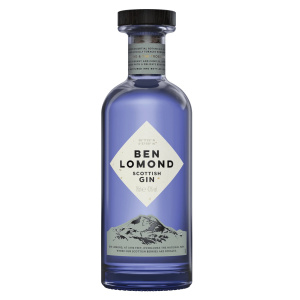
Ben Lomond Scottish Gin 0.7l 43%
€26.95 Add to cart -

Crafter’s London Dry Gin 0.7L. 43%
€23.95 Add to cart -

Mackmyra Organic Gin 0.7L. 40%
€24.95 Add to cart -

IMAGIN Stockholm Dry Gin 0.7L. 40%
€12.95 Add to cart -

Znaps of Sweden Ultra Premium Gin 0.7L. 40%
€19.95 Add to cart -

Crafter’s Aromatic Flower Gin . Magic Color Change! 0.7L. 44,3%
€24.95 Add to cart -

Ben Lomond Blood Orange & Pink Grapefruit Scottish Gin 0.7l 38%
€26.95 Add to cart -

Ben Lomond Blackberry & Gooseberry Gin 07l 38%
€26.95 Add to cart -
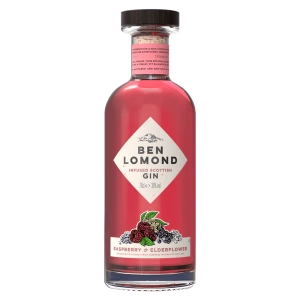
Ben Lomond Raspberry & Elderflower Gin 0.7l 38%
€26.95 Add to cart -

Crafter’s Distilled Original Gin 1L. 40%
€9.95 Add to cart