



Discover›Spirits guide
Rum
From sugar cane to glass
Cane, sun and wood: rum is the spirit of the sugar islands, and the most varied in the world. Here is how it’s made, from molasses or fresh juice, in pot stills or columns, why it ages so fast in the tropics, and what the label really tells you.
A short history
Born on the sugar islands
Sugar cane reached the Caribbean with Columbus. By the 1640s the plantations of Barbados and Martinique were distilling what their boiling houses left behind, the molasses and skimmings, into a fierce new spirit. That wealth was built on the forced labour of enslaved Africans, and rum itself became one of the goods of the Atlantic triangular trade. Where the name comes from is uncertain; the favourite theory is ‘rumbullion’, old English slang for an uproar.
- 1493On his second voyage, Columbus brings sugar cane from the Canary Islands to Hispaniola, today’s Dominican Republic and Haiti.
- c. 1651A visitor to Barbados describes ‘Rumbullion, alias Kill-Divil’, a hot and terrible liquor made from sugar cane: the first known use of the name.
- 1703A deed of sale records a still house on the Mount Gay estate in Barbados, the oldest written proof of a rum distillery still at work today.
- 1740Admiral Vernon orders the Royal Navy’s daily rum to be mixed with water. Sailors call it ‘grog’, after his grogram cloak.
- 1880sBeet sugar sinks cane prices. On Martinique, planters such as Homère Clément distil fresh cane juice instead: rhum agricole is born. It gets its own AOC in 1996.
- 1970On 31 July, ‘Black Tot Day’, the Royal Navy pours its last daily ration of rum, after more than three centuries.
How it’s made
Seven steps from cane to bottle
Every rum starts with sugar cane. Which part of the cane, how long it ferments, the still and the climate it ages in: that is what separates a light Spanish-style ron from a heavy Jamaican pot-still rum.
01
The cane
Sugar cane is a giant tropical grass. It grows for a year or more, storing sugar in its jointed stalks, and is cut by hand with a machete or by machine. The roots stay in the ground and send up new stalks, so one planting gives several harvests.
Once cut, the clock is ticking: within a day the sugar starts to break down, so the cane has to reach the mill fast. Distilleries that work with fresh juice keep their fields close by.
1 dayfrom field to mill, at most
02
Juice, honey or molasses
At the mill, heavy rollers crush the cane. The juice that runs out (vesou in the French islands, guarapo in Spanish) is about 15 to 20% sugar, and the crushed fibre, the bagasse, fuels the boilers. To make sugar, the juice is boiled until crystals form; what’s left once they’re spun out is molasses, thick, dark and still around half sugar.
Molasses keeps for months and travels well, which is why most of the world’s rum is made from it. Rhum agricole is distilled from the fresh juice instead, within days of the harvest. A few producers use juice gently boiled down to a syrup: Zacapa’s ‘virgin sugar cane honey’ is one.
≈ 90%of rum is made from molasses
03
Fermentation
Molasses is diluted with water; juice is used as it is. Yeast turns the sugar into a ‘wash’ of roughly 6 to 9% alcohol. How long it takes is a matter of style: a light rum may ferment for a day or two, a heavy Jamaican pot-still rum for two weeks or more.
Long fermentations make esters, the fruity compounds behind the ripe banana and pineapple of Jamaican rum. Some distilleries there add ‘dunder’, the sour liquid left in the still after a run, and even ‘muck’ from carefully tended pits, to push the esters higher still.
2 weeks+fermentation for high-ester Jamaican rum
04
Pot stills
Pot stills work in batches and keep a lot of flavour. Jamaica, Barbados and Guyana use them for their richest rums. Jamaica’s double-retort still is a pot still followed by two smaller copper vessels, the retorts, holding low wines and high wines from earlier runs. The vapour bubbles through both, so a single run gives a rich spirit of about 85%.
In Guyana, Demerara Distillers still work the last wooden stills in the world. The Port Mourant double wooden pot still comes from an estate founded in 1732, and its rum goes into El Dorado, including the 8-year-old on our shelves.
≈ 85%off a double-retort still, in one run
05
Column stills
Most rum today comes from column stills, which run non-stop. The wash flows in near the top, steam rises from below and carries the alcohol up with it. Multi-column stills can make a very light, clean spirit, the base of the Spanish-style rums of Cuba, Puerto Rico and Latin America. European law only asks that rum comes off the still below 96%.
Rhum agricole uses the Creole column, a single copper column. In Martinique it must stop between 65 and 75%, so the cane’s grassy, fruity character stays in. Many distilleries run both kinds and blend: Mount Gay and El Dorado mix pot-still and column rums.
65–75%off the Creole column for AOC Martinique
06
Ageing in the tropics
Most aged rum spends its life in used oak barrels, very often ex-bourbon, sometimes sherry or wine casks. In Caribbean heat the spirit works in and out of the wood much faster than in a cool cellar, and the angels take far more: around 6 to 10% a year, against about 2% in Scotland. Rum makers say a year in the tropics does the work of two or three in Europe.
Speed has a price: after ten tropical years, around half the barrel can be gone, which is why very old rums are rare. Some rum is shipped young to Europe to age slowly. Zacapa does the opposite: it ages at 2,300 metres in the Guatemalan highlands, where the cool air slows everything down.
6–10%a year to the angels in the tropics
The solera system
Borrowed from sherry. Barrels sit in tiers: rum for bottling is drawn from the bottom row, the solera, which is topped up from the row above, and so on up to the newest rum at the top. Old and young rums keep marrying, so each batch tastes like the last. Zacapa and a number of Latin American rums work this way. Worth knowing: on a solera rum the number on the label is not always an age. Zacapa 23, for example, is a blend of rums aged between 6 and 23 years.
07
Blending & bottling
The blender marries rums of different ages, stills and casks, then brings them down with water: at least 37.5% in Europe, usually 40% or more. Some white rums are aged for a while and then filtered through charcoal to take the colour out again.
Caramel may be added for colour. Sugar is the touchy subject: in the EU a rum may be sweetened up to 20 grams per litre, while Jamaica Rum and AOC Martinique allow none at all. Anything flavoured, such as spiced rum, is not ‘rum’ for EU law: the small print calls it a spirit drink.
20 gof sugar per litre at most for EU rum
Styles
One spirit, many traditions
Rum grew up in the colonies of Spain, Britain and France, and each left its own way of making it. Add the island, the still and the cask, and you get the widest range of any spirit.
Spanish style · ron
Light and smooth, from column stills, often aged in a solera: Cuba, Puerto Rico, the Dominican Republic, Venezuela, Guatemala, Panama. On our shelves: Zacapa, Diplomático, Barceló, Ron Cristóbal.
English style · rum
Fuller and richer, often pot and column rums blended: Barbados, Guyana, Trinidad. Think molasses, toffee and dried fruit. On our shelves: Mount Gay, El Dorado.
Jamaican
Pot stills, long fermentations and plenty of esters: ripe banana, pineapple and the famous ‘funk’. On our shelves: Worthy Park.
French style · rhum agricole
From fresh cane juice, mainly Martinique and Guadeloupe: grassy, floral and peppery when young, rounder with age. Martinique’s AOC has the strictest rules in rum.
White rum
Unaged, or aged briefly and filtered: clean and bright, made for the Daiquiri, the Mojito and the Ti’ Punch. On our shelves: Worthy Park Rum Bar Silver.
Aged rum
Years in oak bring vanilla, caramel, dried fruit and spice. Labels say añejo, rhum vieux or simply give an age. On our shelves: El Dorado 8, Ron Cristóbal Niña 12, Mount Gay XO.
Overproof & navy strength
Bottled strong for punches and tiki drinks. Navy strength is about 57%, 100° on the old British proof scale. On our shelves: Worthy Park 109, Esclavo Overproof, Bocatheva Full Proof.
Spiced & flavoured
Rum with vanilla, spices or fruit added: easy to mix and very popular. In the EU they count as spirit drinks, not rum. On our shelves: Black Magic, Vana Tallinn.
The rules
What the label promises
Rum has fewer worldwide rules than whisky, but the EU and several rum countries set their own. The headline rules, simplified:
Rum in the EU
Regulation (EU) 2019/787
- Made only from sugar cane: molasses, syrup or juice
- Distilled to less than 96%
- Bottled at 37.5% or more
- No flavouring; caramel only for colour
- At most 20 g of sugar per litre
Rhum de la Martinique
AOC, 1996
- Fresh cane juice from approved fields on the island
- Distilled in a Creole column to 65–75%
- Blanc, élevé sous bois (12 months in oak) or vieux
- Vieux: at least 3 years in oak casks under 650 litres
- No added sugar
Jamaica Rum
Geographical indication, 2016
- Fermented and distilled in Jamaica’s limestone regions
- Wash made with naturally filtered limestone water
- From molasses, cane juice or cane sugar
- After distillation only water and caramel may be added: no sugar
Ron de Venezuela
DOC, 2003
- Made in Venezuela from Venezuelan cane
- At least 2 years in oak barrels of 150 litres or more
- No flavourings; caramel only for colour
- On our shelves: Diplomático
A simplified summary; the full texts go into more detail. Other countries have their own rules: Ron Dominicano, for example, must spend at least a year in oak.
Words to know
A short rum glossary
- Rhum agricole
- Rum made from fresh sugar cane juice instead of molasses, mostly in the French Caribbean.
- Molasses
- The thick, dark syrup left when sugar crystals are taken out of boiled cane juice. The base of most rum.
- Dunder
- The sour liquid left in the still after a run, added to new ferments in Jamaica to build flavour.
- Esters
- Fruity aroma compounds formed during fermentation. High-ester rums are measured in grams per hectolitre of pure alcohol.
- Hogo
- Rum lovers’ word for the wild, overripe fruit of high-ester rum, from the French haut goût. Also called funk.
- Solera
- Tiered ageing borrowed from sherry: rum is drawn from the oldest barrels, which are topped up from younger ones.
- Rhum vieux · añejo
- ‘Old’ in French and Spanish. Under AOC Martinique, vieux means at least three years in oak; elsewhere it varies.
- Navy strength
- About 57% alcohol, or 100° on the old British proof scale. Today a style name for strong, punchy rum.
- Overproof
- Bottled well above the usual 40%, often 57% or more. Mostly for mixing.
- Cachaça
- Brazil’s cane-juice spirit, a cousin of rhum agricole with its own legal category.
How to taste
Five steps to taste rum
- Choose the glassA tulip-shaped glass for sipping, a tumbler or highball for mixing.
- LookColour comes from the cask, and sometimes from caramel, so it tells you less about age than you might think.
- NoseGive it a moment. Look for fresh cane and grass in agricole, banana and pineapple in Jamaican rum, toffee and vanilla in aged Spanish styles.
- Add water or iceA few drops open up an overproof rum. A large ice cube is fine too.
- Taste & finishAsk where the sweetness comes from: the oak, or the sugar bowl? Then let the finish tell you about the still and the cask.
Not sure where to start? Come and talk rum with us at the shop: we’re happy to help you choose.
Plan your visit →In our shop
Rum on our shelves
From Zacapa’s Guatemalan highlands and Diplomático’s Venezuela to Mount Gay’s Barbados, El Dorado’s Guyana and Worthy Park’s Jamaica: rums from more than a dozen countries. Collect them at the shop or get free local delivery.
-
★★★★★Sale!Very recommended
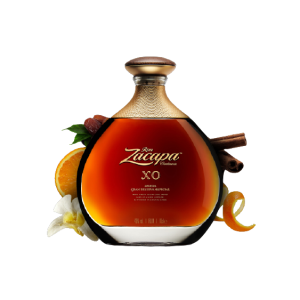
RUM ZACAPA XO 0.7L 40%
Original price was: €107.95.€94.95Current price is: €94.95. Add to cart -
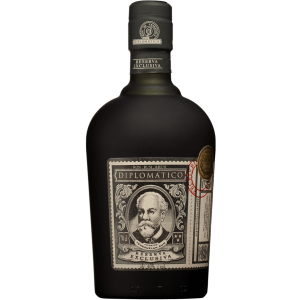
Ron Diplomatico Reserva Exclusiva 0.7L 40%
€31.95 Add to cart -
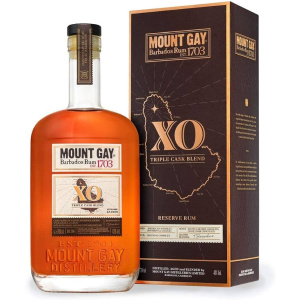
Mount Gay XO Triple Cask Blend 0.7L 43%
€39.95 Add to cart -

El Dorado 8yo 0.7L 40%
€21.95 Add to cart -

Worthy Park Single Estate Reser. 0.7l 45%
€39.95 Add to cart -

ZACAPA NO. 23 0.7L 40%
€41.95 Add to cart -

Ron Cristóbal Santa Maria Oloroso 14 Yo Dominican Rum 0.7l 46%
€42.95 Add to cart -

Don Papa Masskara 0.7L 40%
€28.95 Add to cart -

Worthy Park 109 1l 54.5%
€19.95 Add to cart -

Compañero Añejo Panamanian Rum 0.7l 54%
€32.40 Add to cart -

Bocatheva Venezuelan Rum 15 yo Full Proof 0,7l 62%
€39.95 Add to cart -

Ron Cubaney 25 Years Old 0.7l 38%
€50.95 Add to cart