


Discover›Spirits guide
Champagne
From the chalk hills of Champagne to your glass
Champagne is a sparkling wine from one place only: the Champagne region of north-eastern France. Its bubbles come from a second fermentation inside the very bottle you open. Here is how it is made, step by step, what ‘Brut’, ‘Blanc de Blancs’ or ‘Grand Cru’ on the label mean, and how to serve it.
A short history
From still wine to sparkle
For centuries Champagne made still wines, mostly pale reds. Its cold winters stopped fermentation before it was finished, and in spring it started again in the bottle. What winemakers first saw as a fault became the region’s fame.
- 1662In London, the scientist Christopher Merret describes to the Royal Society how wine coopers add sugar to wine to make it sparkle. English glass, stronger than French, can hold the pressure.
- 1668Dom Pierre Pérignon becomes cellar master of the abbey of Hautvillers. He did not invent the bubbles, but he is credited with mastering the blending of grapes from different villages and the art of pressing black grapes into white wine.
- 1729A year after a royal decree allows wine to travel in bottles, Nicolas Ruinart founds the first champagne house in Reims. Moët, Veuve Clicquot and many others follow over the century.
- 1816Madame Clicquot and her cellar master Antoine Müller invent the riddling table, which gathers the yeast in the neck of the bottle. For the first time champagne can be crystal clear.
- 1927After years of disputes, including the growers’ riots of 1911, a French law draws the borders of the Champagne vineyard. The appellation d’origine contrôlée follows in 1936.
- 2015UNESCO lists the Champagne hillsides, houses and cellars as World Heritage: the historic vineyards of Hautvillers, Aÿ and Mareuil-sur-Ay, the Avenue de Champagne in Épernay and the chalk cellars of Reims.
How it’s made
From vine to bubbles: eight steps
Champagne is made by the traditional method: a still white wine is bottled with a little sugar and yeast and ferments a second time in the bottle. Every step, from the hand harvest to the cork, is set by the rules of the appellation.
01
Vineyard & chalk
Champagne is one of the most northerly great vineyards in the world, about 150 km east of Paris. Around 34,000 hectares of vines grow on the slopes around Reims and Épernay and, further south, in the Aube, spread over 319 villages called crus.
Under a thin topsoil lies chalk, laid down by the sea tens of millions of years ago. It drains well yet holds water for dry summers, and the cool climate keeps the grapes fresh and lively: just what a sparkling wine needs.
≈ 34,000 haof vines in 319 villages
02
Three grapes
Seven grape varieties are allowed, but three make almost all champagne. Pinot Noir, about 38% of the vineyard, brings body and red-fruit depth. Meunier, about 31%, is round and fruity and thrives in the cooler Marne valley. Chardonnay, also about 31%, brings finesse, citrus and the ability to age.
Two of the three are black grapes, yet champagne is mostly white: the juice of black grapes is clear as long as it is pressed gently, away from the skins. Blanc de Blancs is made from white grapes only, Blanc de Noirs from black grapes only.
7grape varieties allowed; three make almost all of it
03
Hand harvest & gentle pressing
Harvesting machines are not allowed: every bunch is picked by hand and reaches the press whole, so that the black skins do not colour the juice. The harvest runs for about three weeks, from late August into September.
Pressing is slow and done in stages. From each 4,000 kg of grapes, called a marc, only 2,550 litres of juice may be kept: the first 2,050 litres, the cuvée, are the purest and freshest; the next 500, the taille, are fruitier and softer. Many houses keep the two apart.
2,550 Lof juice at most from 4,000 kg of grapes
04
Base wines & the blend
Each grape and each village is first fermented separately into a still, sharp white wine, the vin clair. Most go through malolactic fermentation; a few houses ferment some of their wines in oak.
In early spring the cellar master tastes them all and builds the blend, the assemblage. For a non-vintage champagne, young wines are blended with reserve wines kept from earlier years, so that the house style stays the same from one year to the next. A vintage champagne uses the wines of a single great year.
Dozensof wines can go into a single blend
05
The second fermentation
The blend is bottled with the liqueur de tirage, a little wine with sugar and yeast, usually about 24 g of sugar per litre, and closed with a crown cap like a beer bottle. This is the tirage.
Laid down in the cool cellar, the yeast slowly ferments that sugar. The alcohol rises by a little over 1%, and the carbon dioxide, with nowhere to go, dissolves in the wine. This is the prise de mousse, the ‘capture of the foam’, and it takes a few weeks.
≈ 6 barof pressure in the bottle, more than twice a car tyre
06
Years on the lees
The bottles then rest on their sides in the cellars, many of them dug deep into the chalk under Reims and Épernay, where it stays cool and steady all year round. Some houses have kilometres of galleries.
As the spent yeast, the lees, slowly breaks down, it gives the wine its creamy bubbles and notes of brioche, biscuit and toast. The rules ask for at least 15 months in the cellar before a non-vintage champagne is sold, 12 of them on the lees, and 3 years for a vintage. Most good houses wait far longer.
15 monthsat least before release; 3 years for a vintage
07
Riddling
To get the yeast out, it must first slide into the neck. The bottles go neck-down into a pupitre, a riddling rack with angled holes, and a remueur gives each one a short, sharp turn every day, tilting it a little steeper each time. By hand it takes several weeks.
Most houses now use gyropalettes, machines that turn a whole crate of 504 bottles at once, day and night, in about a week. Hand riddling lives on for large bottles and some prestige cuvées.
504bottles turned at once by a gyropalette
08
Disgorging, dosage & cork
The neck is dipped into a freezing bath, which traps the yeast in a small plug of ice. When the crown cap comes off, the pressure shoots the plug out and the wine is left clear. This is the dégorgement.
A small dose of wine and sugar, the liqueur d’expédition, tops up the bottle and sets its style, from bone dry to sweet. Then comes the cork, held by its wire cage, the muselet, and a few more months of rest before the bottle leaves the cellar.
< 12 gof sugar per litre in a Brut
Styles
Eight styles of champagne
One method, many champagnes. The grapes, the years in the blend, the time on the lees and the final dosage make the difference. These are the names you will see on the label.
Brut non-vintage
The house style, blended every year from the three grapes and several harvests: fresh, balanced and ready to drink, and the bottle most houses are known for. On our shelves: Deutz Brut Classic, Gosset Grande Réserve, Devaux Grande Réserve, Monthuys Brut Réserve and Piaff Brut.
Blanc de Blancs
Made only from white grapes, nearly always Chardonnay, often from the Côte des Blancs. Light, precise and mineral, with citrus and, with age, hazelnut and brioche. Lovely as an aperitif. On our shelves: Piaff Blanc de Blancs.
Blanc de Noirs
White champagne made only from black grapes, Pinot Noir, Meunier or both, a speciality of the Montagne de Reims, the Marne valley and the Aube. Fuller and rounder, with red-fruit notes; a champagne for the table.
Rosé
Most is made by adding a little still red wine from Champagne to the blend; some by leaving the juice briefly on the black skins. From pale salmon to deeper pink, with strawberry and cherry notes. On our shelves: Veuve Clicquot Rosé, from the house that made the first known blended rosé in 1818, and Piaff Rosé.
Vintage
Millésimé in French: made only in the best years, from the grapes of a single harvest, with the year on the label, and aged at least 3 years, often far longer. More intense and complex, and built to keep.
Prestige cuvées
Each house’s finest wine, from its best plots and often a single great year, aged for many years and made in small quantities: Moët & Chandon’s Dom Pérignon or Louis Roederer’s Cristal are the best known.
Extra Brut & Brut Nature
Little or no sugar added at the end: up to 6 g per litre for Extra Brut; under 3 g, with none added, for Brut Nature, also called zero dosage. Pure and bracing, at their best with oysters and shellfish.
Demi-Sec & sweeter
Extra Dry, Sec, Demi-Sec and Doux, in rising order of sweetness: confusingly, Extra Dry is sweeter than Brut. Sweet champagne was the fashion of the 19th century; today a Demi-Sec is the match for fruit desserts and tarts.
The rules
What the label means
The appellation sets how champagne is made, and EU rules set the sweetness words on every label. The headline rules, simplified:
AOC Champagne
Area since 1927, AOC since 1936
- Grapes from the mapped Champagne area only, mainly Pinot Noir, Meunier and Chardonnay
- Picked by hand and pressed as whole bunches: at most 2,550 litres of juice per 4,000 kg
- Second fermentation in the very bottle that is sold
- At least 15 months in the cellar before release, 12 of them on the lees; 3 years for a vintage
- Only this wine may be called champagne, in the EU and in many countries worldwide
Sweetness: the dosage
EU rules for all sparkling wine
- Brut Nature: under 3 g of sugar per litre, none added
- Extra Brut: 0 to 6 g
- Brut: under 12 g; most champagne is Brut
- Extra Dry: 12 to 17 g. Sec: 17 to 32 g
- Demi-Sec: 32 to 50 g. Doux: over 50 g
Who made it
The small print on the label
- NM, négociant-manipulant: a house, which may buy grapes from growers
- RM, récoltant-manipulant: a grower making champagne from their own vines
- CM, coopérative de manipulation: a growers’ cooperative
- MA, marque auxiliaire: a brand owned by a buyer, such as a shop or a restaurant
- Grand Cru: grapes only from the 17 top-rated villages. Premier Cru: from these or 42 more
Other sparkling wines
Same idea, other places
- Traditional method: second fermentation in the bottle; the words ‘méthode champenoise’ are kept for champagne
- Crémant: eight French appellations, from Alsace to Bordeaux, at least 9 months on the lees
- Cava: Spain’s traditional-method wine, mostly from Catalonia, at least 9 months on the lees
- Franciacorta: Lombardy’s bottle-fermented wine, at least 18 months on the lees
- Prosecco: Italian, from the Glera grape, usually fermented a second time in a large tank
A simplified summary; the appellation’s rules go into more detail. The Champagne area also makes a little still wine, sold as Coteaux Champenois, and the rare still Rosé des Riceys.
Words to know
A short champagne glossary
- Cuvée
- The first and finest juice of the pressing; also the name a house gives to one of its blends.
- Assemblage
- The blend of grapes, villages and years that makes a champagne.
- Reserve wine
- Wine kept from earlier harvests to blend into non-vintage champagne.
- Prise de mousse
- The second fermentation in the bottle that creates the bubbles.
- Lees
- The spent yeast; long ageing on the lees brings creaminess and notes of brioche.
- Remuage
- Riddling: turning and tilting the bottles so the yeast slides into the neck.
- Dégorgement
- Disgorging: removing the frozen plug of yeast from the neck.
- Dosage
- The wine and sugar added after disgorging, which sets how dry the champagne is.
- Muselet
- The wire cage that holds the cork in place against the pressure.
- Perlage
- The streams of fine bubbles rising in the glass.
How to taste
Five steps to enjoy champagne
- The glassA tulip-shaped or white-wine glass shows the aromas better than a narrow flute, and keeps the bubbles better than a wide coupe. Serve non-vintage at about 8 to 10 °C, vintage and prestige cuvées a little warmer.
- OpeningKeep a thumb on the cork as you loosen the cage. Hold the cork, turn the bottle slowly and let the cork ease out with a soft sigh rather than a pop. Pour in two goes so the foam can settle.
- LookWatch the bubbles: fine, steady streams are a sign of quality and long ageing. The colour runs from pale straw to deeper gold; rosé from pale salmon to raspberry.
- Nose & tasteLook for citrus, apple and white flowers, then brioche, toast and almond from the lees, and with age honey and dried fruit. On the palate, feel the freshness, the creamy mousse and how long the flavour lasts.
- At the tableBrut and Blanc de Blancs with oysters, shellfish and sushi; Blanc de Noirs and vintage with poultry or fish in a creamy sauce; rosé with salmon or red berries; Demi-Sec with fruit tarts. Keep an opened bottle cold, closed with a champagne stopper.
Looking for a bottle to celebrate, or a gift? Come and see us at the shop: we’re happy to help you choose.
Plan your visit →In our shop
Champagne on our shelves
Great houses such as Deutz, Gosset and Veuve Clicquot, Devaux from the Côte des Bar, family champagnes from Monthuys and Piaff, and Blanc de Blancs and rosé. Collect them at the shop or get free local delivery.
-
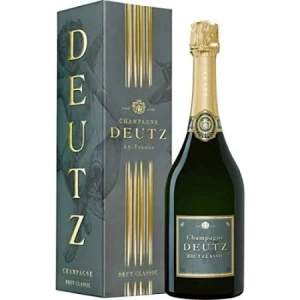
Champagne Deutz Brut Classic 0.75l 13%
€43.95 Add to cart -

Champagne Gosset Brut Grande Reserve 0,75% 12%
€44.95 Add to cart -
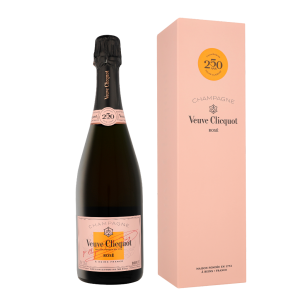
Champagne Veuve Clicquot Brut Rosé 0.75l 12.5%
€63.95 Add to cart -
★★★★★Very recommended

Champagne Devaux- Grande Réserve Brut 0.75l 12%
€29.95 Add to cart -

Champagne Monthuys Brut Reserve 0,75l 12,5%
€25.95 Add to cart -
★★★★★Very recommended
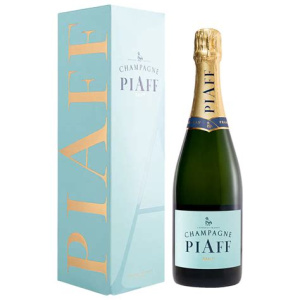
Champagne AOC Piaff Brut 0,75l 12%
€39.95 Add to cart -
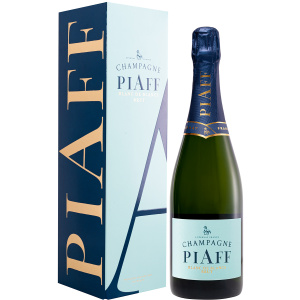
Champagne Piaff Blanc de Blanc Brut 0.75l 12%
€69.95 Add to cart -
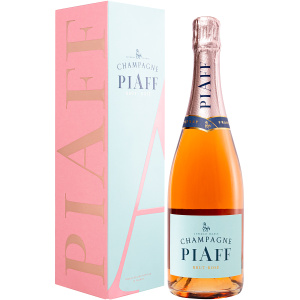
Champagne Piaff Brut Rosé 0.75l 12%
€49.95 Add to cart